
Blogs
Neck Pain When Turning Head: Signs & Next Steps
Neck pain when turning head can make everyday activities like driving, looking over your shoulder, or getting out of bed uncomfortable. You may feel a sharp pain when turning to one side, stiffness that limits movement, or soreness spreading toward your shoulder.
This discomfort often comes from muscle strain, irritated joints, or problems involving the cervical spine. While mild neck pain may improve with home care, persistent symptoms may require professional attention.
At Abundant Life Clinic of Chiropractic, we help patients understand their neck pain and explore appropriate care options to improve comfort and mobility.
What causes neck pain when turning your head?
Your neck contains muscles, joints, discs, and nerves that work together to support and move your head. When one of these structures becomes irritated, turning your head may trigger pain or stiffness.
Several conditions can contribute to this discomfort.
Muscle strain and spasms
Muscle strain is a common reason for neck pain during movement. It happens when the muscles supporting your neck become overstretched or irritated.
Common triggers include:
- Sleeping with your neck in an awkward position.
- Looking down at your phone for extended periods.
- Working at a computer without changing positions.
- Making sudden or unfamiliar neck movements.
Strained muscles may feel tight, sore, or tender. In some cases, muscle spasms can make turning your head especially uncomfortable.
Over time, poor posture may also contribute to muscle fatigue and recurring neck discomfort.
Stiff or irritated neck joints
Small joints connect the bones in your cervical spine and help your neck bend, tilt, and rotate. When these joints become irritated or stiff, you may experience localized pain when looking over your shoulder or turning your head too far. The discomfort can feel sharp during movement and ease when your neck returns to a comfortable position.
Cervical disc problems
The discs between the bones of your neck act as cushions and help your spine move smoothly.
A bulging or herniated disc may irritate nearby nerves, causing neck pain that sometimes extends into the shoulder or arm.
Other possible symptoms include:
- Tingling in the arm or hand.
- Numbness in the fingers.
- Weakness in certain arm or hand muscles.
However, not every disc problem causes symptoms, and neck pain alone does not confirm a disc injury.
Age-related changes in the neck
As people age, the discs and joints in the cervical spine naturally change.
Some individuals develop cervical spondylosis, a condition involving age related wear in the neck.
These changes may contribute to stiffness, reduced mobility, or discomfort during movement. However, many people have age-related changes without experiencing neck pain.
How do these causes compare?
Although symptoms often overlap, certain patterns may provide useful clues.
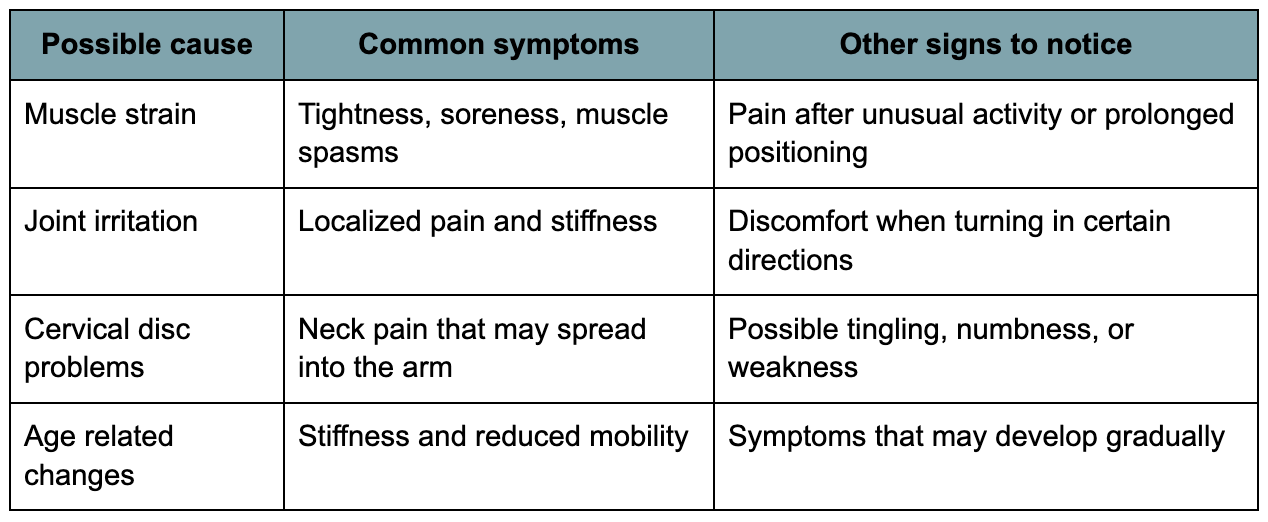
These differences can help you describe your symptoms, but a professional examination may be needed to identify the underlying cause.
Why does your neck hurt when turning left or right?
Some people experience neck pain only when turning their heads in one direction. For example, turning left might cause a sharp sensation on the right side of your neck, while turning right feels relatively comfortable. This can happen when muscles or joints become irritated during certain movements.
Pain may occur on the same side you turn toward or on the opposite side, depending on which tissues are affected. However, the direction of your pain alone cannot identify its cause.
Pay attention to whether your discomfort:
- Occurs only when turning left or right.
- Feels sharp, dull, or tight.
- Spreads into your shoulder or arm.
- Improves when your head returns to a neutral position.
These details can help a healthcare professional better understand your symptoms.
When is neck pain when turning your head serious?
Most mild neck pain is not caused by a dangerous condition. However, certain symptoms deserve medical attention.
Recognizing the difference between persistent discomfort and potentially serious warning signs can help you make safer decisions.
When should you see a healthcare professional?
Arrange an evaluation if you experience:
- Neck pain that persists or gradually worsens.
- Pain that interferes with sleep or daily activities.
- Recurring numbness or tingling in your arm or hand.
- Increasing difficulty turning your head.
When should you seek emergency medical care?
Seek immediate medical attention if neck pain occurs with:
- A serious accident, fall, or other significant injury.
- Sudden weakness, difficulty walking, or loss of coordination.
- A severe headache accompanied by fever and neck stiffness.
- Sudden severe neck pain with unusual dizziness, vision changes, or difficulty speaking.
These symptoms may indicate conditions that require urgent medical evaluation.
Understanding the warning signs of serious neck pain can also help you recognize when discomfort should not be ignored.
What should you do when turning your head hurts?
If your neck pain is mild and there are no warning signs, several simple measures may help reduce discomfort while your neck recovers.
1. Keep your neck moving gently
Avoid keeping your neck completely still for long periods unless a healthcare professional advises otherwise. Instead, try slowly turning your head from side to side within a comfortable range to maintain mobility. Stop if the movement causes sharp or increasing pain, and never force your neck beyond its natural range.
2. Try heat or cold therapy
Heat and cold can both provide temporary relief from neck discomfort.
- Cold therapy: May help reduce pain after a recent strain or injury.
- Heat therapy: May help relax tight muscles and ease stiffness.
Apply a wrapped cold pack or a comfortably warm compress for approximately 15 to 20 minutes at a time.
Avoid placing ice or excessive heat directly against your skin.
Choose the option that feels most comfortable rather than following a strict schedule.
3. Adjust your posture and sleeping position
Your daily habits can affect how much strain your neck experiences.
Try these adjustments:
- Keep your computer screen near eye level.
- Avoid looking down at your phone for extended periods.
- Take regular breaks from sitting.
- Use a pillow that supports a comfortable neck position.
Small changes may help reduce repeated irritation, especially if your symptoms develop after prolonged sitting or sleeping.
4. Avoid movements that make your pain worse
When your neck feels stiff, you may be tempted to stretch it forcefully or twist it until it cracks.
However, aggressive stretching or sudden twisting can increase discomfort.
Avoid trying to forcefully crack your own neck, especially when you have unexplained pain.
If a particular movement repeatedly causes sharp pain, stop and allow your neck to rest in a comfortable position.
If your symptoms continue despite these changes, professional evaluation may help identify what is causing the discomfort.
Can chiropractic care help with neck pain when turning your head?
Chiropractic care may help some people experiencing neck pain related to muscle tension, joint stiffness, or limited mobility. However, the appropriate treatment depends on the underlying cause. A chiropractor typically begins by reviewing your medical history, identifying movements that trigger discomfort, and assessing your neck’s range of motion.
Depending on the findings, care may include:
- Gentle manual therapy to address certain joint or muscle problems.
- Exercises designed to support neck mobility and strength.
- Guidance on posture and daily activities.
- Recommendations for additional medical evaluation when necessary.
Some forms of manual therapy may provide short term relief for certain types of neck pain, particularly when combined with appropriate exercises.
However, chiropractic adjustments are not suitable for every condition. Cervical manipulation also carries risks, including rare but serious complications, which should be discussed before treatment.
At Abundant Life Clinic of Chiropractic, we focus on understanding each patient’s symptoms and identifying appropriate care options based on their individual needs.
Our goal is to help patients make informed decisions about managing discomfort and supporting comfortable movement.
Finding the right care for neck pain
Neck pain when turning your head can result from muscle strain, joint irritation, or other conditions affecting the cervical spine. While mild discomfort may improve with gentle movement and posture adjustments, persistent pain or symptoms spreading into your arms deserve professional attention.
At Abundant Life Clinic of Chiropractic, we provide chiropractic care tailored to individual needs, with a focus on supporting comfortable movement and managing musculoskeletal discomfort. If neck pain is affecting your daily activities, contact us to discuss your symptoms and available care options.
Frequently asked questions
Can a bad pillow cause neck pain when turning your head?
Yes. A pillow that doesn’t support your neck properly can strain muscles and cause stiffness or pain when turning your head.
How long does a stiff neck usually last?
Mild neck stiffness often improves within a few days. If pain persists, worsens, or comes with other symptoms, seek medical advice.
Should you stretch your neck if turning your head hurts?
Gentle stretching may help, but avoid forcing painful movements. Stop if stretching causes sharp pain or increases discomfort.
Can neck pain when turning your head cause headaches?
Yes. Certain neck problems can trigger headaches, especially when muscles or joints become irritated.

Are you looking for a great family chiropractor in New Castle?
Contact us for a FREE consultation: 765-388-2525
Abundant Life Clinic
of Chiropractic
1220 Church Street
New Castle, IN 47362
765-388-2525
Office Hours
Mon ∙ Tue ∙ Wed
8:30am – 1pm & 3pm – 6pm
Thu ∙ Fri ∙ Sat ∙ Sunday
Closed