
Blogs
Upper Back Pain Between Shoulder Blades: Causes & Relief
Upper back pain between shoulder blades can feel like a dull ache, sharp pain, or persistent tightness. Common causes include muscle strain, poor posture, and problems affecting the joints or nerves in the upper spine.
While mild discomfort often improves with home care, persistent or worsening pain may require professional evaluation. At Abundant Life Clinic of Chiropractic, we provide chiropractic care in New Castle, IN to help patients manage musculoskeletal discomfort and improve spinal mobility.
Understanding the possible causes can help you find appropriate relief and recognize when medical attention is necessary.
What causes upper back pain between shoulder blades?
Pain between the shoulder blades often develops when muscles, joints, or nerves in the upper back become irritated. However, some medical conditions can also cause pain in this area.
Muscle strain and overuse
Muscle strain is a common cause of upper back pain. It can develop after lifting heavy objects, exercising intensely, or repeating the same movements throughout the day.
You may notice a dull ache, muscle tenderness, or discomfort that increases when you move your shoulders or upper back. Mild strains often improve with activity adjustments and gentle movement.
Poor posture
Sitting at a desk for hours, looking down at your phone, or leaning forward can place additional demands on the muscles supporting your upper back.
Over time, these habits may contribute to muscle fatigue, stiffness, and discomfort between the shoulder blades. Understanding the side effects of poor posture can help you identify daily habits that may be contributing to your symptoms.
Muscle knots and myofascial pain
Muscle knots, sometimes called trigger points, are sensitive areas within tight muscle tissue. They commonly affect muscles around the shoulders and upper back, including the trapezius and rhomboids.
These areas may feel tender when pressed and can sometimes cause pain that spreads to nearby muscles.
Arthritis and thoracic joint problems
The thoracic spine is the middle section of your spine, located behind your chest and between your shoulder blades. Arthritis and irritation of the spinal joints can contribute to stiffness and discomfort in this area.
Symptoms may include pain when twisting, reduced upper back mobility, or stiffness after remaining in one position for too long.
Herniated discs and nerve irritation
A herniated disc occurs when part of a spinal disc pushes through its outer layer. If nearby nerves become irritated, pain may develop.
Although disc herniation is less common in the thoracic spine than in the neck or lower back, it can sometimes cause pain around the shoulder blades. Other symptoms may include burning sensations, tingling, or pain that spreads around the chest.
Pain related to other medical conditions
Not all pain between the shoulder blades comes from muscles or spinal joints. Certain conditions involving the heart, lungs, or gallbladder can cause pain that spreads to the upper back. This is known as referred pain.
These conditions may require urgent medical attention, particularly when upper back pain occurs with chest discomfort, breathing difficulties, or other unusual symptoms.
What does pain between the shoulder blades feel like?
Upper back pain can feel different depending on the underlying cause. Some people experience constant aching, while others notice sharp discomfort during certain movements.
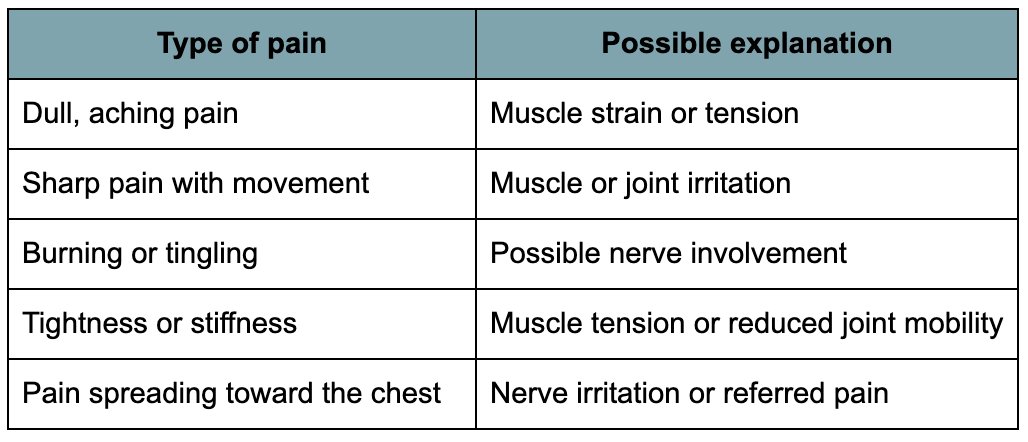
These symptoms may provide clues about the cause, but the type of pain alone cannot confirm a diagnosis.
How can you relieve upper back pain between shoulder blades?
If your pain is mild and appears related to muscle tension or overuse, several home care strategies may help reduce discomfort.
- Apply heat or cold: Cold packs may ease discomfort after a recent muscle strain, while gentle heat can relax tight muscles. Apply a wrapped cold pack or warm compress for 15 to 20 minutes.
- Take regular movement breaks: Sitting or standing in one position for too long can contribute to stiffness. Try standing, walking, or gently moving your shoulders every 30 to 60 minutes.
- Try gentle upper back stretches: Simple movements can help improve flexibility. For example, sit upright, gently squeeze your shoulder blades together, hold for three to five seconds, and repeat five to ten times. Stop if the movement increases your pain.
- Improve your sitting posture: Keep your computer screen near eye level, support your lower back, and avoid leaning forward for extended periods. Changing positions regularly can also reduce muscle fatigue.
- Stay physically active: Gentle walking and comfortable daily movement may help prevent stiffness. Avoid activities that worsen your symptoms, but do not remain in bed for long periods unless advised by a healthcare professional.
If discomfort continues despite these changes, a professional evaluation can help identify the underlying cause.
When should you worry about pain between your shoulder blades?
Most upper back discomfort is related to musculoskeletal problems, but certain symptoms may indicate a more serious condition.
Seek emergency medical care if upper back pain occurs with:
- Chest pain, pressure, or tightness.
- Shortness of breath.
- Sudden, severe upper back pain.
- Fainting, cold sweats, or severe dizziness.
- Pain spreading to the jaw or arm with other concerning symptoms.
Schedule a medical evaluation if you experience:
- Pain that persists or progressively worsens.
- Numbness, tingling, or muscle weakness.
- Pain following a fall or injury.
- Fever or unexplained weight loss.
Recognizing the warning signs of serious back or neck pain can help you determine when additional medical care is necessary.
Can chiropractic care help with upper back pain?
Chiropractic care may help some people experiencing upper back pain related to muscle tension, joint stiffness, or other musculoskeletal problems.
A chiropractor typically reviews your symptoms, medical history, and spinal mobility before recommending a treatment approach. Depending on your condition, care may include:
- Spinal adjustments: May help improve joint mobility and reduce discomfort in selected patients.
- Mobility exercises: Support flexibility and comfortable movement.
- Posture guidance: Helps identify daily habits that may contribute to muscle strain.
- Lifestyle recommendations: Encourage activity adjustments that support recovery.
Evidence supporting spinal manipulation specifically for thoracic pain remains limited, and results vary between individuals. Chiropractic care is not appropriate for every cause of upper back pain, particularly when symptoms suggest fractures, significant nerve problems, or conditions involving internal organs.
Finding the right care for upper back pain
Upper back pain between shoulder blades can result from muscle strain, poor posture, joint problems, or other medical conditions. Identifying the cause helps determine which approach to care is appropriate.
At Abundant Life Clinic of Chiropractic, we focus on understanding each patient’s symptoms and providing chiropractic care tailored to their needs.
If upper back discomfort is affecting your daily activities, contact us to discuss your symptoms and whether chiropractic care may be appropriate.
Frequently asked questions about upper back pain
Can stress cause pain between the shoulder blades?
Yes. Stress can increase muscle tension around the neck, shoulders, and upper back, contributing to aching or tightness between the shoulder blades.
Can sleeping positions cause upper back pain?
Yes. Uncomfortable sleeping positions or inadequate pillow support may strain upper back muscles and contribute to morning stiffness.
How long does upper back pain between the shoulder blades last?
Mild muscle related pain may improve within days to a few weeks. Recovery depends on the underlying cause and severity.
Can upper back pain between shoulder blades go away on its own?
Yes. Mild muscle strain or overuse may improve with gentle movement and home care. Persistent or worsening symptoms should be evaluated.

Are you looking for a great family chiropractor in New Castle?
Contact us for a FREE consultation: 765-388-2525
Abundant Life Clinic
of Chiropractic
1220 Church Street
New Castle, IN 47362
765-388-2525
Office Hours
Mon ∙ Tue ∙ Wed
8:30am – 1pm & 3pm – 6pm
Thu ∙ Fri ∙ Sat ∙ Sunday
Closed