
Blogs
When Does Pelvic Pain Start in Pregnancy?
Pelvic pain in pregnancy rarely arrives on a neat schedule. Some women feel a dull ache in the first few weeks. Others sail through months with no trouble, then wake up sore at the front of the pelvis.
So when does pelvic pain start in pregnancy? For most women it begins between week 14 and week 30. It can start earlier and it can start later. Below is the timeline by stage, the common causes behind each type of pain, and the warning signs that mean you should call your provider today.
The short answer on timing
Pelvic pain can begin as early as the first few weeks, but the middle stretch of pregnancy is the most common window. Around week 12 the hormone relaxin softens the ligaments holding your pelvic joints together. The pelvis widens. Joints that once felt solid start moving more than usual, and that extra movement is what many women feel as pain.
Pelvic girdle pain, usually shortened to PGP, most often appears between 14 and 30 weeks. Around one in five pregnant women deal with pelvic pain at some stage, according to the pregnancy charity Tommy’s. That makes it one of the most common complaints in prenatal care.
Timing alone will not tell you what is causing the trouble. That depends on which muscles and joints are under strain, and the answer shifts as your body changes during pregnancy.
Pelvic pain by trimester
Each stage puts stress on a different part of the pelvic region. This table shows what tends to happen and when.
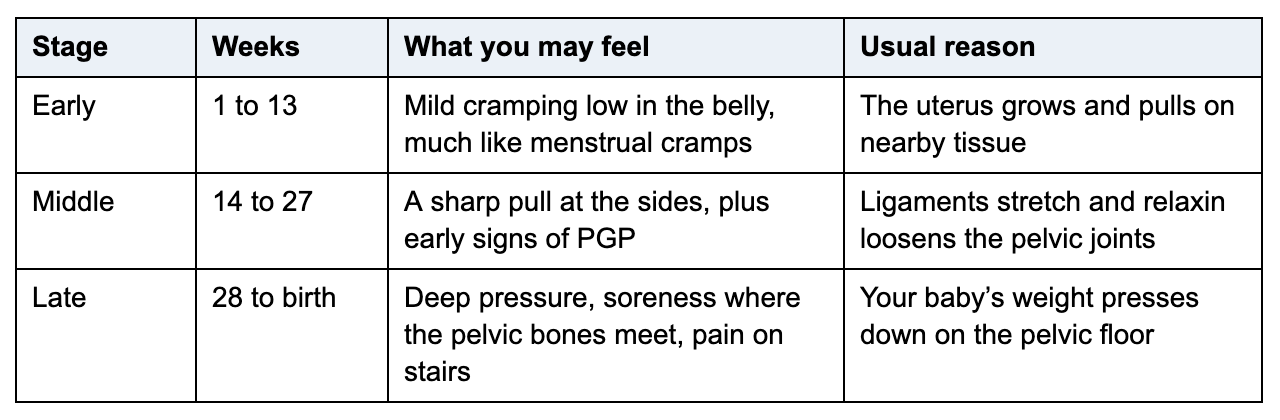
First trimester
Early cramping catches many women off guard because it feels so much like a period starting. The uterus stretches to make room, and the tissue anchoring it takes the load. This pain typically comes and goes, stays mild, and eases with rest.
One thing to watch. Discomfort in the lower belly paired with vaginal bleeding needs a same day call to your obstetrician or midwife, since it can signal miscarriage or an ectopic pregnancy.
Second trimester
Round ligament pain shows up here. The round ligaments run from the top of the uterus down toward the groin. When they stretch, a sharp jab hits low in the belly as you stand quickly, sneeze, or roll over in bed. The stab lasts seconds, then fades.
This stage is also when PGP tends to begin. Many women describe a bruised feeling at the front of the pelvis, sometimes with a clicking sound when they walk.
Third trimester
By now the load has shifted. Your baby weighs several pounds, and that weight sits on the pelvic floor and the joints below it. Pain often turns into pressure, and ordinary tasks get harder. Rolling over, climbing stairs, and getting out of the car become the moments that hurt.
Some women also notice a tightening sensation across the belly. Occasional tightening is normal. Regular tightening before 37 weeks is not, and it deserves a phone call.
Common causes of pelvic pain during pregnancy
The types of pelvic pain women report fall into a handful of groups. Knowing which one you have changes what actually helps.
- Pelvic girdle pain. Ache across the pelvic joints, caused by those joints stiffening or moving unevenly. Doctors once called it symphysis pubis dysfunction, and you may still hear SPD used for the same set of symptoms.
- Round ligament pain. A short, sharp pull along one or both sides of the lower abdomen, triggered by sudden movement. Harmless, though startling.
- Pelvic floor strain. These muscles hold up your uterus, bladder, and bowel. Extra weight tires them, which shows up as heaviness low in the pelvis.
- Urinary tract infections. These bring pelvic ache plus burning when you urinate and a constant urge to go. They need antibiotics, not stretches.
- A pregnancy outside the womb. Rare, and only relevant early on, but serious. When a pregnancy implants away from the reproductive organs where it belongs, it causes severe pain on one side and needs emergency care.
Once you know the source, the symptom pattern usually confirms it.
What symptoms of PGP feel like
People with PGP report a fairly consistent set of common symptoms:
- Soreness over the pubic bone
- Aching across the low back where the pelvis meets the spine
- Pain spreading into the buttocks or inner thighs
- A clicking or grinding feeling when you walk
- Trouble rolling over in bed or getting out of a car
- Difficulty standing on one leg to put on pants
Not sure whether you have PGP or something simpler? This comparison helps.

That distinction matters, because ligament pain settles on its own while PGP responds best to hands on treatment.
When pelvic pain is not normal
Most pregnancy pelvic pain is uncomfortable rather than dangerous. A small number of cases are not.
Call your doctor or midwife right away if you have:
- Vaginal bleeding of any amount
- Fever or chills alongside the pain
- Pain so severe it does not ease when you lie down
- Burning or stinging when you urinate
- Regular tightening or cramping before 37 weeks
- Sudden sharp pain on one side, especially with dizziness or shoulder tip pain
Head to the emergency room if the pain is intense and you feel faint. Those concerning symptoms need assessment the same day, not at your next appointment.
Treatment for pelvic girdle pain
You do not have to wait it out. The Royal College of Obstetricians and Gynaecologists supports early referral, and treatment works better the sooner it starts. Options include:
- Physical therapy. A physical therapist trained in women’s health can assess how your pelvic joints move and build an exercise plan around what they find. In the UK the same physiotherapy role is called a physiotherapist.
- A pelvic support belt. Worn low across the hips, it adds stability while you walk and stand. Ask a professional to fit it.
- Movement changes. Keep your knees together getting in and out of a car. Sit down to dress. Take smaller steps. Climb stairs one at a time.
- A warm bath. Heat relaxes the muscles around irritated joints and often takes the edge off in the evening.
- Sleep support. A pillow between your knees keeps the pelvis level overnight and cuts down pain when you turn.
It also helps to write in your birth plan how far apart your legs can comfortably go, so your team can protect those joints through labour and birth.
How chiropractic care supports prenatal comfort
Pregnancy changes the way your pelvis, joints, and muscles work together. At Abundant Life Clinic of Chiropractic in New Castle, Dr. Maudeline Newell, D.C. regularly cares for expecting mothers experiencing pelvic girdle pain and other pregnancy related discomfort. Every treatment is adapted to your stage of pregnancy, with gentle techniques designed to support comfort, mobility, and pelvic balance.
Before recommending care, Dr. Newell takes time to understand your symptoms, movement, and health history so treatment fits your individual needs. Depending on your condition, your care may include pregnancy appropriate chiropractic adjustments, soft tissue therapy, and practical guidance to help you stay comfortable throughout your pregnancy.
If you have questions about whether chiropractic care is right for you, we are happy to offer a free initial consultation at 765-388-2525.
Frequently asked questions
Can pelvic pain begin in the first trimester?
Yes, mild cramping can appear within the first few weeks as your womb grows and pulls on nearby tissue. Sharper girdle pain more commonly starts after week 14.
Does pelvic pain in pregnancy harm the baby?
No, this pain does not harm your baby, though it can make daily movement difficult for you. It still deserves treatment, because untreated pain tends to worsen throughout pregnancy.
Will the pain go away after birth?
For most women symptoms improve within weeks or months after the baby is born. Around one in ten keep having symptoms longer and benefit from ongoing therapy.
Are you looking for a great family chiropractor in New Castle?
Contact us for a FREE consultation: 765-388-2525
Abundant Life Clinic
of Chiropractic
1220 Church Street
New Castle, IN 47362
765-388-2525
Office Hours
Mon ∙ Tue ∙ Wed
8:30am – 1pm & 3pm – 6pm
Thu ∙ Fri ∙ Sat ∙ Sunday
Closed