
Blogs
Walking With Sciatica: Is It Helpful or Harmful?
Walking with sciatica can be helpful when it keeps you moving without making your symptoms noticeably worse. But more walking is not always better. Pain that travels farther down the leg, increasing numbness, or new weakness can be signs that you need to stop and have your symptoms evaluated.
At Abundant Life Clinic of Chiropractic in New Castle, IN, we encourage patients to pay attention to how sciatica responds to movement, not simply how many steps they can complete. Where you feel the symptoms, how they change as you walk, and what happens afterward can all provide useful information.
Is walking good for sciatica?
For many people, gentle walking can be a reasonable way to stay active with sciatica. Walking keeps the body moving without the impact of activities such as running and can break up long periods of sitting.
Guidance for low back pain with sciatica also supports staying active with regular walks and gentle exercise rather than relying on prolonged bed rest.
Walking may help you:
- Maintain everyday mobility.
- Avoid stiffness from staying in one position too long.
- Break up long periods of sitting.
- Gradually return to normal daily activity.
- Learn which level of movement your symptoms currently tolerate.
Is it better to rest or walk with sciatica?
A painful flare can make rest feel like the safest choice. Short periods of rest may be useful when symptoms are intense, but staying in bed or avoiding movement for long periods can lead to more stiffness and make it harder to return to normal activity.
A better approach for many people is to alternate between comfortable activity and rest. That might mean taking a short walk, changing positions regularly, and resting when needed instead of spending most of the day sitting or lying down.
Gentle movement can be gradually increased as your symptoms allow. The goal is not to push through worsening nerve symptoms, but to find a level of activity your body can tolerate without causing a significant flare.
Why sciatica can make walking painful
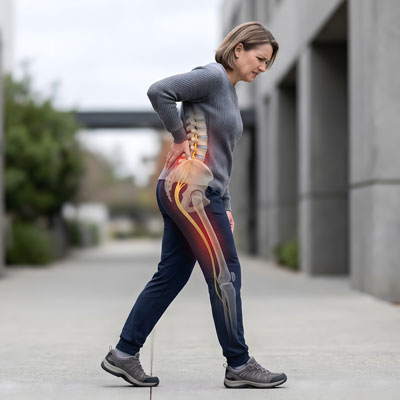
Sciatica pain can include sharp, burning, or shooting pain that travels from the lower back or buttock into the leg. Some people also experience tingling, numbness, or weakness. At Abundant Life, these are important details because they can tell us more than pain intensity alone.
Sciatica is linked to irritation or compression affecting the nerve roots that form the sciatic nerve. Disc problems and other changes around the lower spine can contribute to these symptoms.
That is also why two people with sciatica can respond very differently to the same walk. One person may feel better after several minutes of movement, while another may notice that leg symptoms gradually increase.
We do not expect every patient to follow the same walking routine. The underlying problem, current symptoms, and response to movement all matter.
When walking with sciatica can make symptoms worse
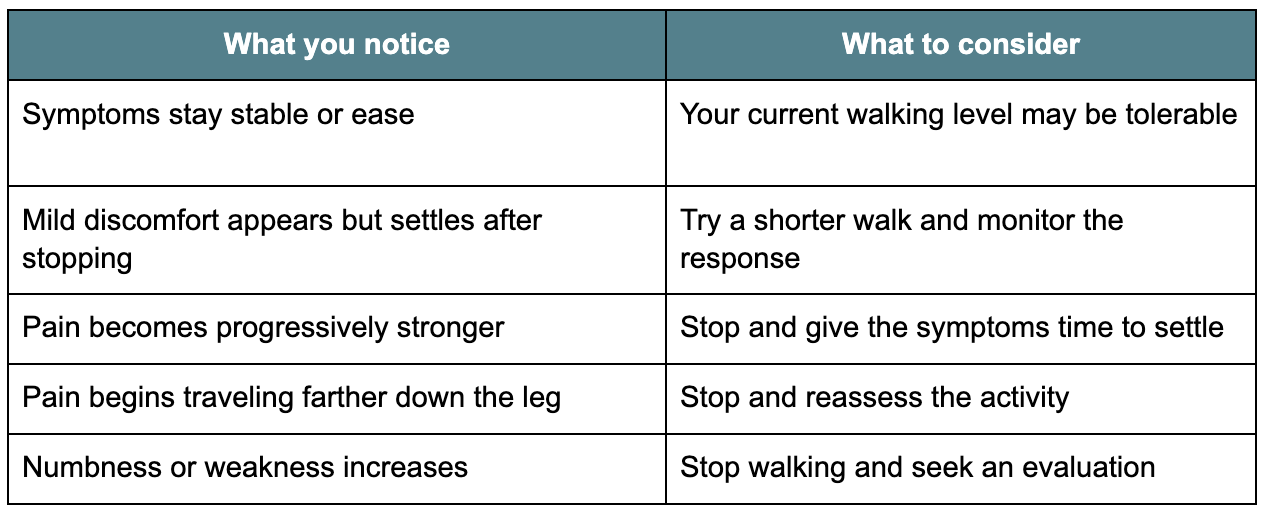
Pay attention to how your symptoms change while walking. Increasing pain, numbness, tingling, or weakness can be a sign to slow down or stop.
Tips for walking more comfortably with sciatica
A few simple adjustments can make walking with sciatica more comfortable and manageable.
- Warm up first: Spend a few minutes with gentle movement and light stretching before you start walking. This can help your body ease into activity rather than going from rest directly into a longer walk.
- Take shorter, natural steps: Avoid reaching too far forward with each step. A shorter, comfortable stride can help you move more naturally and reduce unnecessary stress through the lower back and hips.
- Keep your posture relaxed: Walk upright without forcing your back into a rigid position. Keep your shoulders relaxed, let your arms move naturally, and avoid tensing your body as you walk.
- Choose a flat surface: Start on level, predictable ground where you can maintain a comfortable pace. Avoid steep hills, uneven trails, or slippery surfaces when your symptoms are easily aggravated.
- Wear comfortable, supportive shoes: Choose shoes that fit well and provide good support while walking. Your footwear should allow you to move naturally without making you feel unstable.
- Let your symptoms guide you: Pay attention to whether pain becomes stronger or travels farther down the leg, as well as any increase in numbness, tingling, or weakness. At Abundant Life, we would rather see patients shorten a walk than push through worsening symptoms just to reach a planned distance or step goal.
When should you stop walking and get checked?
Sciatica deserves an evaluation when it repeatedly limits walking or other normal activities.
Consider getting checked when:
- Pain continues to worsen instead of settling.
- Pain repeatedly travels farther down your leg.
- Numbness or tingling persists or increases.
- Your leg feels weaker than usual.
- Pain causes you to change the way you walk.
- Sciatica is interfering with work, sleep, or everyday movement.
Some symptoms require more urgent medical care. Seek prompt medical attention for new problems controlling your bladder or bowels, numbness around the genital or saddle area, symptoms affecting both legs, or severe or rapidly worsening weakness. These can be signs of serious nerve involvement.
How we evaluate sciatica that affects walking at Abundant Life
At Abundant Life, we look at your health history, where your symptoms begin and travel, which movements make them worse, and how they affect your daily activities. We also evaluate spinal function and movement to determine an appropriate approach for your individual needs.
Depending on the findings, care may include:
- Chiropractic care: Focuses on spinal function and movement to address mechanical factors that may be contributing to your symptoms.
- Spinal decompression: A non surgical option that may be appropriate for certain cases of sciatica and disc related problems.
What to remember when walking with sciatica
With a background in Exercise Science and Kinesiology and a Doctor of Chiropractic degree, Dr. Maudeline Newell, D.C. looks at how symptoms respond to movement, not just how much pain you feel.
As you walk, pay attention to where the pain travels, how your symptoms change, and how long they take to settle after you stop. A shorter walk that your body tolerates is often more appropriate than pushing toward a step goal while pain, numbness, or weakness is increasing.
When sciatica continues to interfere with walking or daily activities, contact us so we can evaluate your symptoms and determine an appropriate next step.
Frequently asked questions about walking with sciatica
Can too much walking make sciatica worse?
Yes. Too much walking can worsen sciatica if pain increases, travels farther down the leg, or comes with more numbness or weakness.
Why does my sciatica hurt more when I walk?
Walking may increase irritation around the affected nerve. This can make pain, tingling, or numbness more noticeable.
Should I walk every day with sciatica?
You can walk daily if your symptoms tolerate it. Keep walks manageable and reduce the amount if symptoms worsen.
Is sitting or walking better for sciatica?
It depends on your symptoms. Avoid staying too long in any position that increases your pain.
Can I walk if I have numbness from sciatica?
Be cautious with numbness. Stop walking and get evaluated if numbness increases or you develop weakness or balance problems.
Are you looking for a great family chiropractor in New Castle?
Contact us for a FREE consultation: 765-388-2525
Abundant Life Clinic
of Chiropractic
1220 Church Street
New Castle, IN 47362
765-388-2525
Office Hours
Mon ∙ Tue ∙ Wed
8:30am – 1pm & 3pm – 6pm
Thu ∙ Fri ∙ Sat ∙ Sunday
Closed