
Blogs
Poor Posture Side Effects You Shouldn’t Ignore
Poor posture side effects don’t announce themselves loudly at first. They build – quietly, gradually – until neck stiffness becomes chronic pain, occasional headaches become weekly events, and the numbness in your hands becomes impossible to ignore.
This guide explains what poor posture is actually doing to your body, how to recognize when symptoms are posture-related, and when it’s time to do more than sit up straighter.
***This article is educational and does not replace a clinical evaluation.
How Poor Posture Affects Your Body Over Time
“Poor posture” isn’t just about how you look. It describes any sustained position that places your spine outside of its natural alignment – rounding forward, dropping the head, collapsing the lower back, or shifting weight unevenly across joints.
When this happens for minutes at a time, the body adapts easily. When it happens for hours every day – across years – the effects stack up:
- Muscles on one side shorten and tighten while the opposing side lengthens and weakens
- Joints bear uneven load, accelerating wear and inflammation
- Spinal alignment drifts from its optimal position, increasing pressure on discs and nerve roots
- The nervous system begins to function under constant low-grade interference
The reason symptoms don’t appear immediately is that the body compensates and compensates well – until it can’t anymore.
The Most Common Side Effects of Poor Posture
Neck and Shoulder Pain (Tech Neck)
Forward head posture is one of the most common bad posture symptoms in desk workers and phone users. Research by Dr. Kenneth Hansraj, published in Surgical Technology International, found that for every inch the head moves forward from neutral, the effective weight on the cervical spine increases by roughly 10 pounds.
That chronic overload creates muscle fatigue, joint compression, and eventually persistent neck and shoulder pain – often misattributed to stress or sleeping position.
Persistent Lower Back Pain
Slouching or anterior pelvic tilt flattens the lumbar spine’s natural curve, concentrating pressure on specific disc levels. Back pain from sitting in poor alignment for extended periods is one of the most common complaints we see and one of the most preventable.
Frequent Headaches and Tension
Posture and headaches are directly connected. Cervical spine tension from forward head posture creates chronic muscle tightness that refers to pain into the base of the skull and temples. Many patients who’ve been treating their headaches for years find the source was postural all along.
Stiffness and Reduced Mobility
When the spine is held in a compromised position for hours daily, the joints become restricted. Morning stiffness, difficulty rotating the neck, and limited lumbar range of motion are classic posture problems symptoms – the body reflecting the shape it’s been held in.
Numbness or Tingling in Arms and Hands
Numbness from posture – particularly forward head posture and rounded shoulders – compresses nerve pathways in the cervical spine and thoracic outlet. The result: pins and needles in the hands, finger numbness, and reduced grip strength that has nothing to do with the hands themselves.
Muscle Fatigue and Low Energy
Maintaining a misaligned posture requires constant muscular effort. The body burns more energy compensating for an inefficient structure – which contributes to the fatigue many desk workers feel by mid-afternoon, even without heavy physical activity.
Breathing Restrictions and Chest Tightness
A rounded thoracic spine physically limits rib expansion. The lungs can’t fill completely when the chest collapses forward. Reduced oxygen efficiency adds to fatigue and can increase anxiety – a side effect of poor posture most people never connect to their slouch.
Can Poor Posture Cause Your Symptoms?
Posture-related symptoms tend to follow a recognizable pattern:
- Worse after prolonged sitting or screen time
- Temporarily improved by movement or stretching, then returning
- Location matches common strain areas – neck, upper back, lower back, shoulders
- Worsening with stress, which increases muscle tension
If several of these describe your daily experience, posture is a likely contributor – not a coincidence.
Long-Term Effects of Poor Posture on the Spine
This is where the stakes get higher. Occasional bad posture symptoms are manageable. Years of uncorrected spinal misalignment are not.
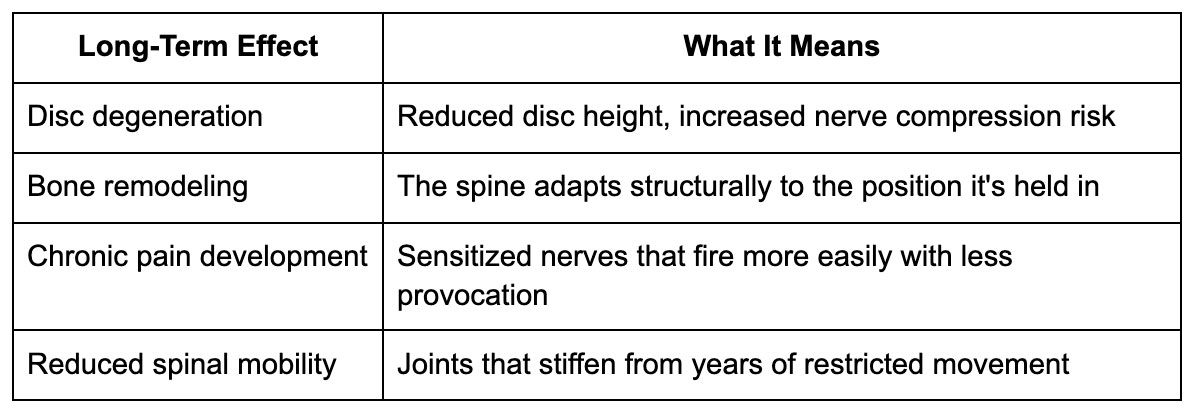
The spine doesn’t just tolerate poor posture – it changes to accommodate it. That’s what makes early correction so much more effective than later intervention.
How to Fix Poor Posture Before It Gets Worse
Practical starting points that make a real difference:
Workstation setup:
- Screen at eye level – not angled down
- Chair height so hips and knees are level
- Keyboard positioned to keep elbows at approximately 90°
Movement habits:
- Stand and move every 30–45 minutes – set a timer
- Avoid crossing legs, which tilts the pelvis
- Walk with intention: chin parallel to the floor, shoulders back and relaxed
Awareness:
- Notice where you hold tension – jaw, shoulders, lower back
- Check your head position when using a phone or reading
These adjustments reduce daily postural load. They don’t correct structural changes that have already occurred – but they stop the accumulation.
How Chiropractic Care Can Help Improve Posture
Stretching addresses flexibility. Strengthening builds support. Chiropractic care addresses the structural alignment underlying both – restoring proper vertebral position so the muscles and nervous system have a stable foundation to work from.
When spinal alignment is restored, muscles don’t have to work as hard to compensate, nerve irritation decreases, and the postural improvements patients make in their daily habits actually hold.
Conclusion: Don’t Ignore the Early Signs of Poor Posture
Poor posture side effects are easy to dismiss because they start small. A tight neck here. A dull headache there. Fingers that tingle occasionally. By the time they become impossible to ignore, the structural changes driving them are well established.
If your symptoms keep returning despite stretching, rest, or habit changes – your posture may be the underlying cause. A proper spinal evaluation identifies what’s actually driving the discomfort, before it becomes a harder problem to solve.
At Abundant Life Clinic of Chiropractic, Dr. Maudeline Newell takes a thorough, patient-first approach to posture and spinal health. As your trusted chiropractor New Castle, we’ll assess your spine, identify what’s contributing to your symptoms, and build a clear plan to address it.
Schedule your spinal evaluation today – and find out what your posture has been quietly doing to your body.

Are you looking for a great family chiropractor in New Castle?
Contact us for a FREE consultation: 765-388-2525
Abundant Life Clinic
of Chiropractic
1220 Church Street
New Castle, IN 47362
765-388-2525
Office Hours
Mon ∙ Tue ∙ Wed
8:30am – 1pm & 3pm – 6pm
Thu ∙ Fri ∙ Sat ∙ Sunday
Closed